Does growth earn its cost?
Read contribution after fulfilment, returns, acquisition and seller support, alongside revenue and volume.
Read the economicsAn operator's perspective on the economics, systems and decisions behind digital commerce, retail, marketplaces and applied AI in the GCC.
My perspective comes from building commerce ventures, launching a country operation, delivering digital products and working through retail margin and cash problems. Here I share the questions, models and lessons behind that work: how a proposition earns, how the operation delivers it and what should be proved before scaling.
Start with a specific operating question, then follow the thinking into a case, a model or a practical article.
Read contribution after fulfilment, returns, acquisition and seller support, alongside revenue and volume.
Read the economicsConnect stock age, markdown, purchasing and store performance before committing more capital.
Explore the retail caseTest customer demand, commercial rights, landed cost and local capacity before adding a market or channel.
Read the market-entry lensStart with a workflow, reliable source data and explicit authority, then measure the operating result.
Read the AI operating modelOperating cases, strategy blueprints and product concepts show how a problem changes the economics, systems and responsibilities. Each page identifies the status of the work.
Move the bank upstream into purchase intent, eligible value and attributed spend.
Open case →
Connect margin, inventory, cash and capital choices.
Open case →Make attribution, service and payouts visible across the transaction.
Open case →Prove rights, landed cost and one channel before local scale.
Open case →Release trapped stock cash before funding a new service.
Open case →Replace cheque-heavy rent collection with consented billing, regulated settlement and transaction-level reconciliation. The source economics remain explicitly modeled.
Open the flagship case ↗A transformation becomes useful when the board can see the value pool, the operating changes required, the systems that hold the facts and the people who have authority to act.
Selected businesses connect the ideas to direct responsibility for the proposition, economics and day-to-day operation.
AI prepares evidence and recommendations inside explicit permissions. People keep authority over money, customer consequence and risk.
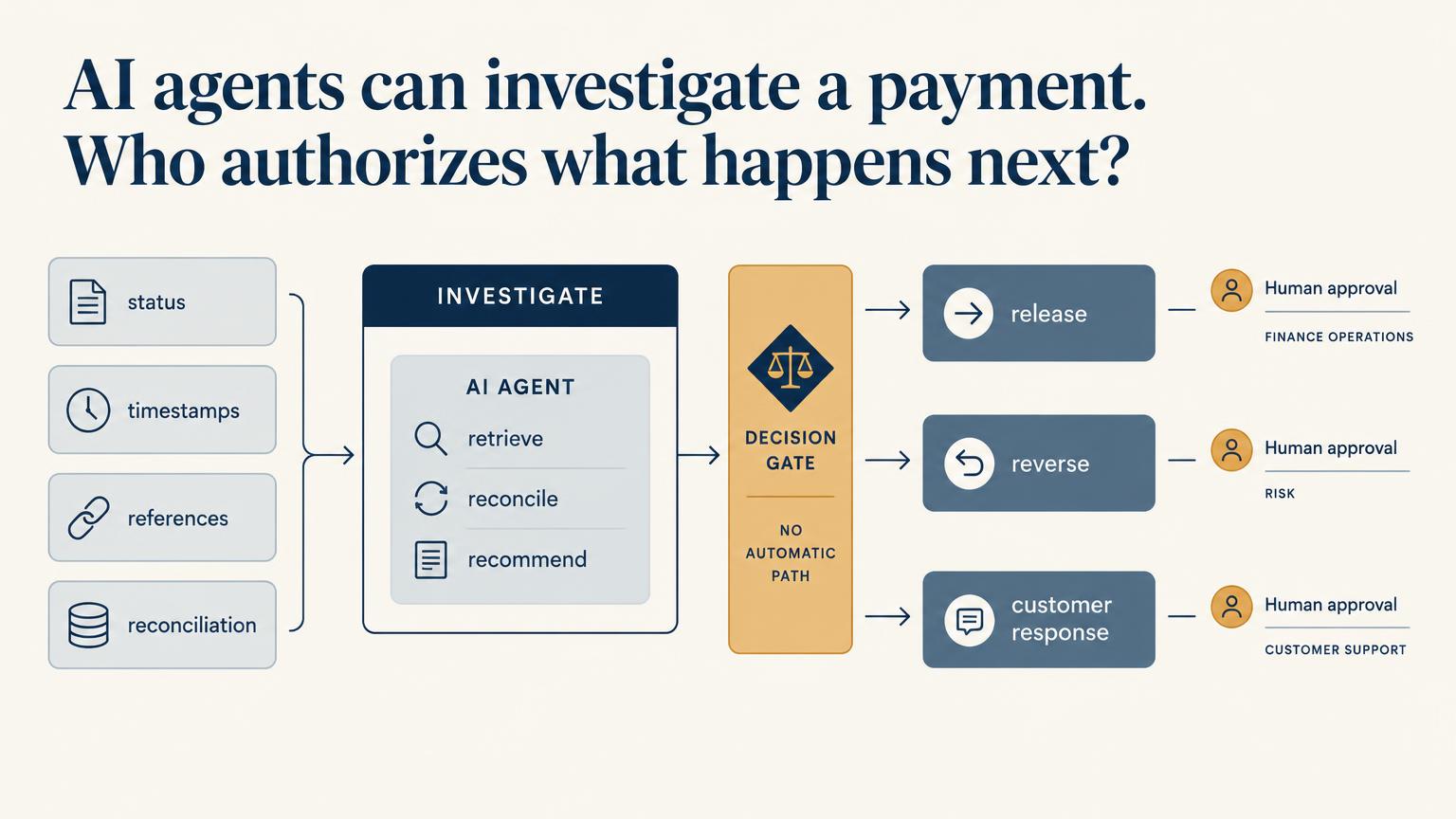
On 23 September 2026, Form3 announced an AI-enabled payments platform designed to let authorised AI agents and people retrieve and interpret payment information inside an AI interface. Its initial Model Context Protocol adaptor is deliberately read-only and keeps the AI outside the payment flow. That makes the operating question concrete: where does investigation end, who owns the next decision, and what evidence should exist before any action affects the customer or the money?
Read insight ↗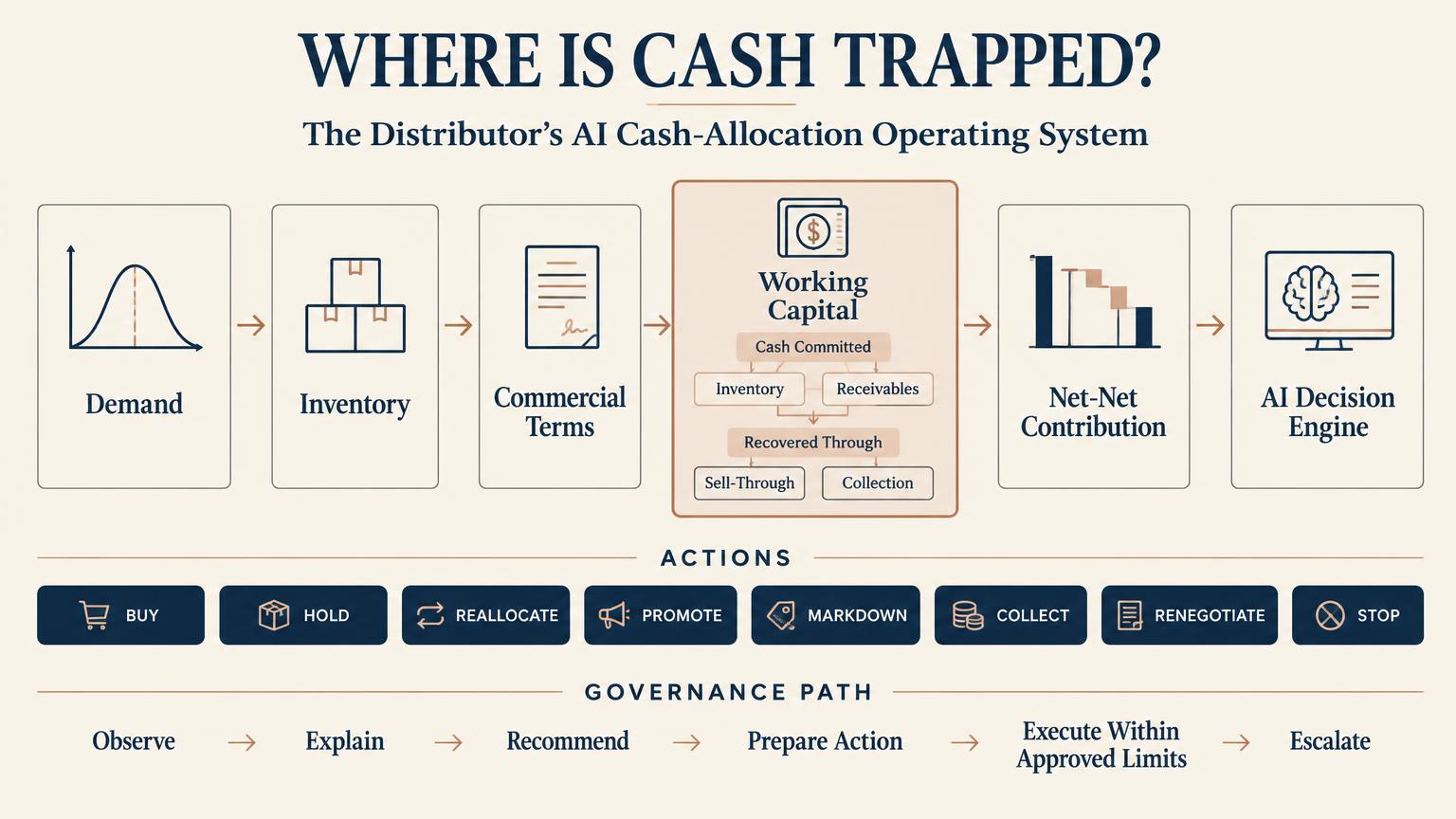
A distributor can report healthy sales and gross margin while cash remains trapped in slow-moving stock, customer receivables, disputed claims and commercial agreements whose full cost is poorly understood. A better demand forecast helps, but it does not by itself answer the owner’s or CFO’s most important question: where should the next unit of cash go-and where should it stop going? The AI-native distributor needs a continuous cash-allocation operating system, not another isolated supply-chain dashboard. This article is a proposed framework for executive review, not a claim that Haris has implemented such a system.
Read insight ↗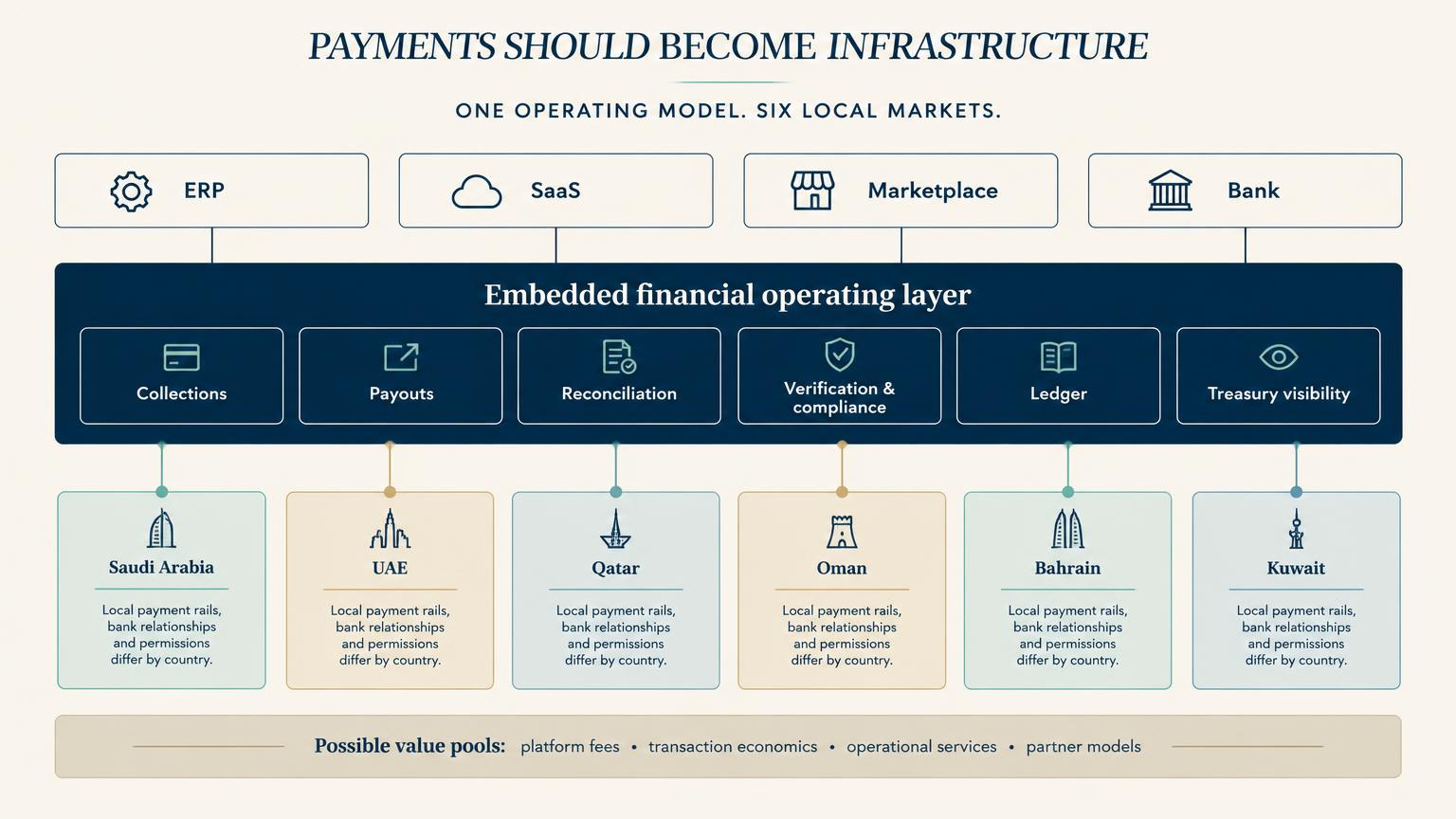
Most businesses still encounter payments at the end of a journey: an invoice is issued, a customer pays, and the transaction is marked complete. For a CEO or CFO, that view is too narrow. The commercial opportunity is to connect the movement of money to the work around it: onboarding, receivables, payables, settlement, reconciliation and cash decisions. Across the GCC, that suggests a powerful model for banks, enterprises and software platforms. It does not suggest one interchangeable regional payments stack. The operating ambition can be shared; the rails, banking relationships and regulatory permissions must be designed market by market.
Read insight ↗Seventeen years across ventures, country operations, retail transformation and enterprise technology.
Read the backgroundFor questions about the ideas and work shared here, connect by email or LinkedIn.
Get in touchGCC growth & transformation
Across Saudi Arabia, the UAE and the wider GCC, the operating lens connects growth, turnaround, digital commerce, AI, marketplaces, fintech, enterprise technology and market entry to commercial economics, ownership and execution.
Priority operating models: Saudi growth & market entry · UAE growth and transformation · payments and embedded finance · retail transformation · enterprise AI transformation.
For the capability map and named operating record, see the GCC operating profile and track record.